
Back to Blogs
Drew Neisser is the founder of CMO Huddles and a globally recognized authority on B2B marketing. He’s an AdAge columnist, LinkedIn TopVoice, leading CMO coach, podcast host & friend of penguins everywhere.
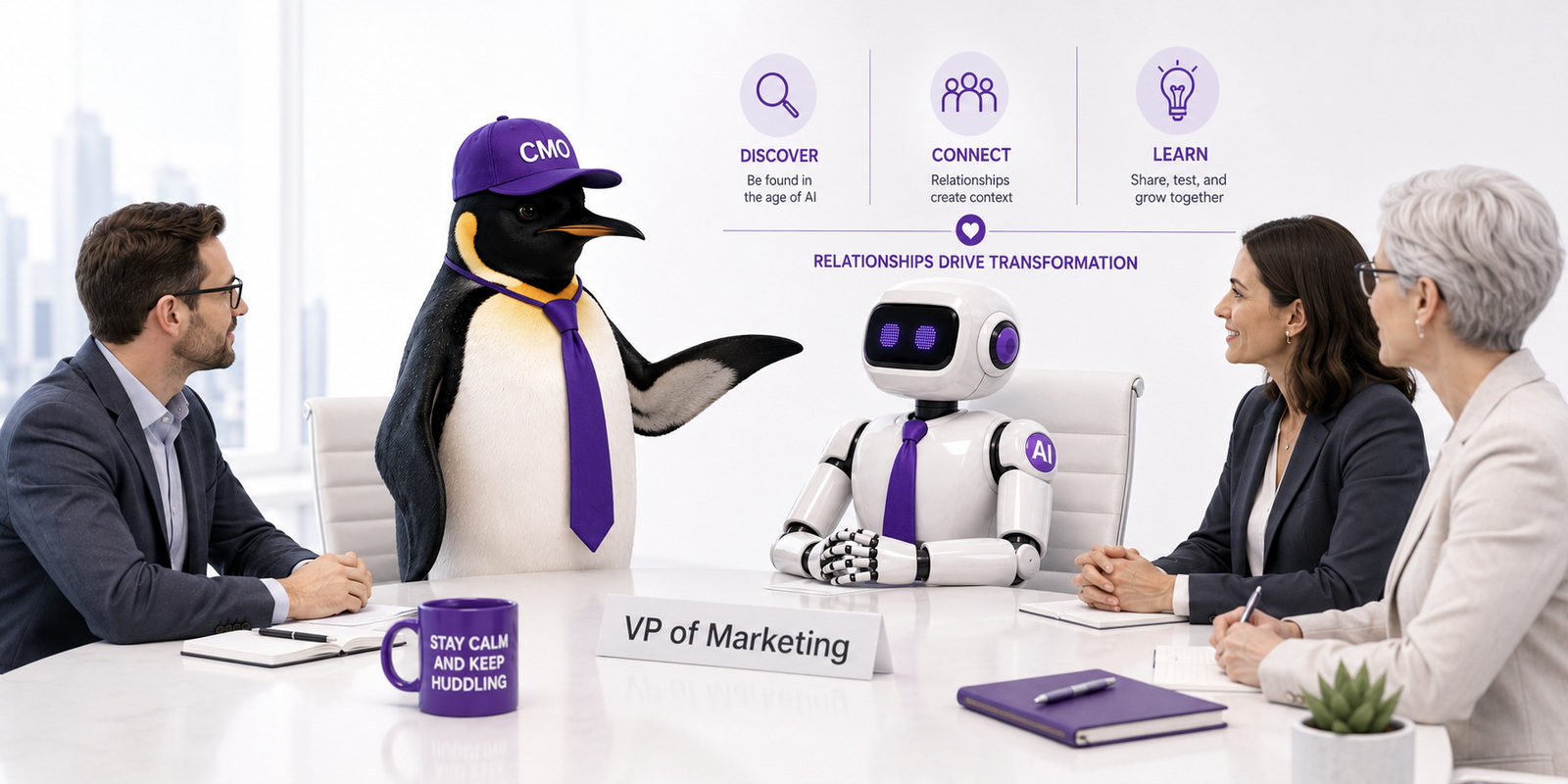
AI agents will reshape marketing work, but CMOs should not confuse automated execution with leadership. Agents can own repetitive, measurable tasks, but humans still need to own meaning, judgment, trust, and strategy. The marketing leaders who win the agentic era will use machines to create more room for actual leadership.
Imagine being told you will report to an AI VP of Marketing. Cue the awkward pause.
A human reporting to an AI agent sounds like the first act of a very bad sci-fi comedy, the kind where the marketing team starts every Monday by asking whether the algorithm seems mad.
The instinctive reaction is to hate the idea. But dismissing it entirely would be a mistake.
AI agents are getting cheaper, more capable, and more persistent. Cost is no longer the main constraint. That means the old organizational assumptions are going to wobble.
Agents are coming for the busywork. They will run reports, clean lists, draft emails, personalize follow-ups, monitor campaigns, update systems, summarize meetings, build landing pages, query databases, and handle a shocking amount of work that used to begin with, can someone just take care of this?
Some of this work should be run by bots. Low-risk, internal, repetitive, measurable, operational work is a good candidate.
Let the agents do more of that. Please.
But calling an agent a VP is where the label starts to strain. A VP does not merely execute tasks. A VP makes tradeoffs, builds trust, reads the room, carries accountability, and helps the business decide what matters.
Great marketing is not just output. It is not testing subject lines, summarizing calls, or generating dozens of post options before breakfast.
Great marketing is seeing what others miss and connecting the unconnected. It is walking a trade show floor, hearing a throwaway comment, and realizing it is the missing link in the company's positioning.
It is sitting in a tense executive meeting and noticing that the real objection is not in the words being spoken. It is knowing when the data is technically right and strategically useless.
Bots hear words. Leaders hear meaning.
AI can accelerate research, challenge assumptions, pressure-test messaging, find patterns, generate options, and expose blind spots. But it cannot build trust, sense hesitation, or know when a team is complying without believing.
At least not where it counts.
The question is not whether AI will redesign marketing teams. It will. The question is whether CMOs will redesign the work first.
Let agents own more of the execution layer. Let humans own more of the meaning layer. Less grunt work. More judgment.
As teams get smaller and agents become more capable, the human traits that remain will matter even more: empathy, listening, trust-building, and judgment.
Maybe one day a human will technically report to a bot. But the marketing leaders who win the agentic era will not surrender leadership to machines. They will use machines to create more room for leadership.
Humanity is the strategy.
They can replace pieces of execution, analysis, and coordination. They cannot replace strategic accountability, trust-building, or executive judgment.
Start with repetitive, measurable, internal workflows where risk is low and quality can be checked clearly.
Meaning, strategy, relationships, tradeoffs, judgment, and decisions where context matters more than output.
Map the work. Decide what agents can own, where humans must lead, and how accountability will remain visible.
CMO Huddles helps B2B marketing leaders win by bringing together peers, fresh perspectives, and opportunities to build stronger personal brands. Want to join the huddle? Learn more about CMO Huddles and apply to join the community.