
Back to Blogs
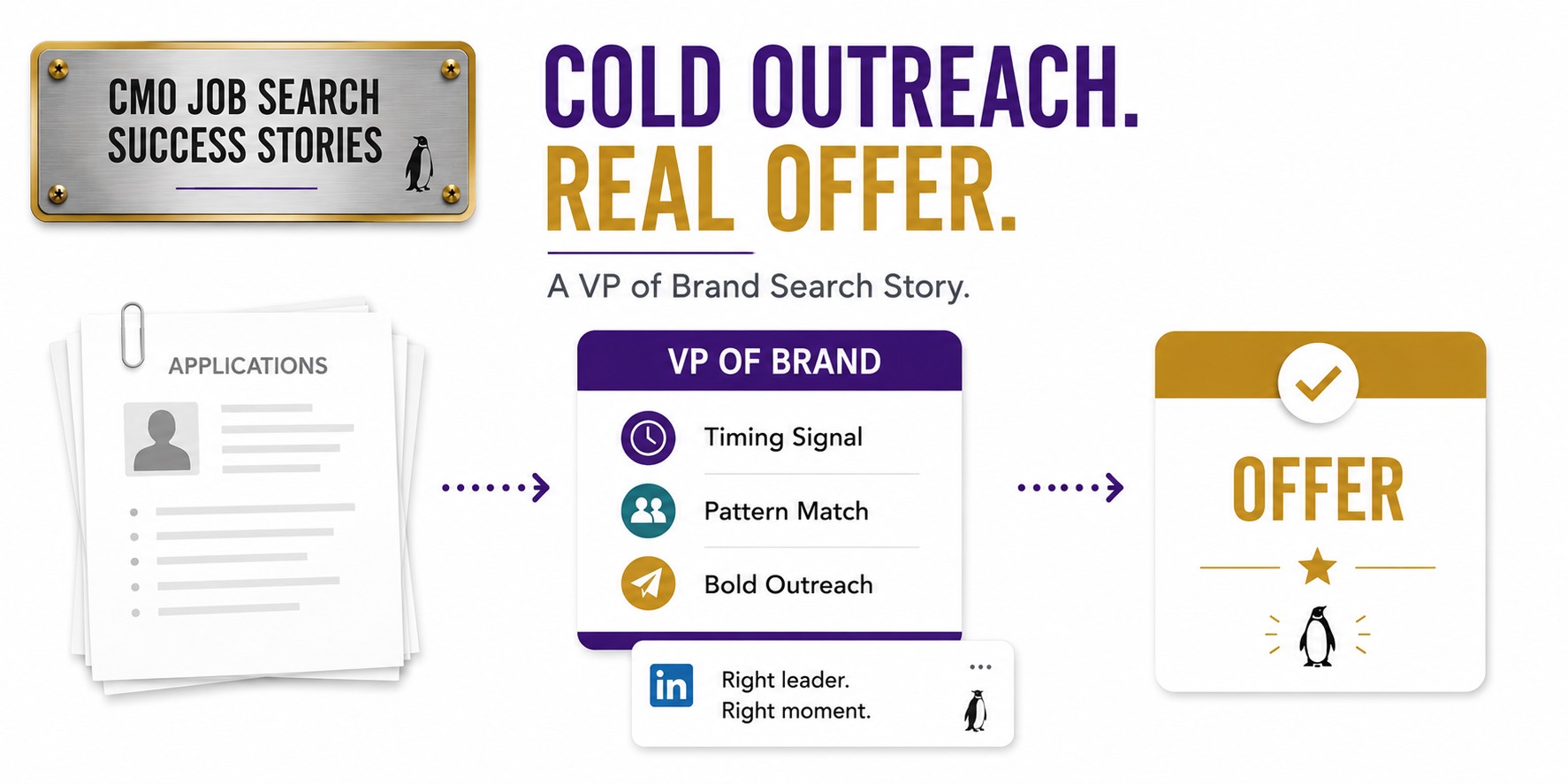
One Huddler shared how they landed a new VP of Brand role through a move many executives hesitate to make: Sending a cold LinkedIn message to the company’s incoming CMO. The role was never posted. The search worked because the timing was sharp, the pattern match was real, and the story was handled directly.
In a Transition Team Huddle, one of our Huddlers shared how they landed their new role as VP of Brand. How? By sending a cold LinkedIn message to the company’s incoming CMO.
The role was never posted. There was no tidy application path. But the Huddler had noticed leadership changes at the company and saw a narrow window: A new CMO was coming in, which often means a new marketing agenda, a new team structure, and new opportunities before they show up publicly.
So they reached out within days of the announcement. The CMO responded within minutes.
Most cold outreach disappears into the LinkedIn void. This one worked because it was timely, relevant, and tied to a real business moment. The process was thorough, but the breakthrough was simple: The Huddler reached the right leader at the right moment with a story that made sense.
“I've gotten comfortable being bolder. I normally would not have done that.”
The message worked because it wasn’t generic networking. It was specific outreach to a specific leader at a specific moment.
The Huddler knew they had a credible pattern match. Even a relatively short prior stint in cybersecurity helped establish category fluency. It gave the hiring team a reason to believe this person understood the market, the buyer, and the pace of the business.
This is the part many executives miss. Pattern match does not have to mean a perfect resume. It means the hiring team can quickly see why your experience lowers the risk of choosing you.
The Huddler also had a short tenure in their background. That could have become a liability. Instead, they addressed it head-on and connected it to the larger story.
“I wish I would have done more discovery work on my skills and how they map to different company sizes.”
Before the market starts defining you, define your own pattern match. Are you a builder? A scaler? A category translator? A transformation leader? The sharper that answer gets, the easier it is for others to place you.
This interview process included a mix of formal references and back-channel checks. The Huddler could tell the CEO had spoken with people beyond the official reference list. That isn’t unusual at the executive level. CEOs, boards, investors, and recruiters often triangulate through their networks.
The negotiation included one especially important point: Protection if the CMO changed and brought in a new team. That kind of change-of-control thinking is practical, not paranoid.
The Huddler wished they had told more people they were in market earlier: “I didn't actively tell a ton of people I was in the market. I wish I would have done that earlier.”
AI also changed their preparation. Geoff Woods’ book, AI-Driven Leader, “changed the way I was using AI to help me prep and think differently.” For more, see the AI-Driven Leader podcast episode.
The main lesson is that targeted outreach can create opportunity before a role is posted, especially when the candidate sees a real business signal and has a clear pattern match.
It worked because the message was timely and relevant. The Huddler noticed an incoming CMO announcement, reached out quickly, and had enough category and scale experience to be credible.
CMOs should address short tenure directly, explain the context briefly, connect it to what they learned, and move the conversation back to fit and value.
Yes. Senior executives should assume back-channel references may happen and proactively prepare by reconnecting with likely former bosses, peers, and direct reports.
CMO Huddles has a dedicated Transition Team for experienced B2B marketing executives navigating what comes next.