
Back to Blogs
Drew Neisser is the founder of CMO Huddles and a globally recognized authority on B2B marketing. He’s an AdAge columnist, LinkedIn TopVoice, leading CMO coach, podcast host & friend of penguins everywhere.
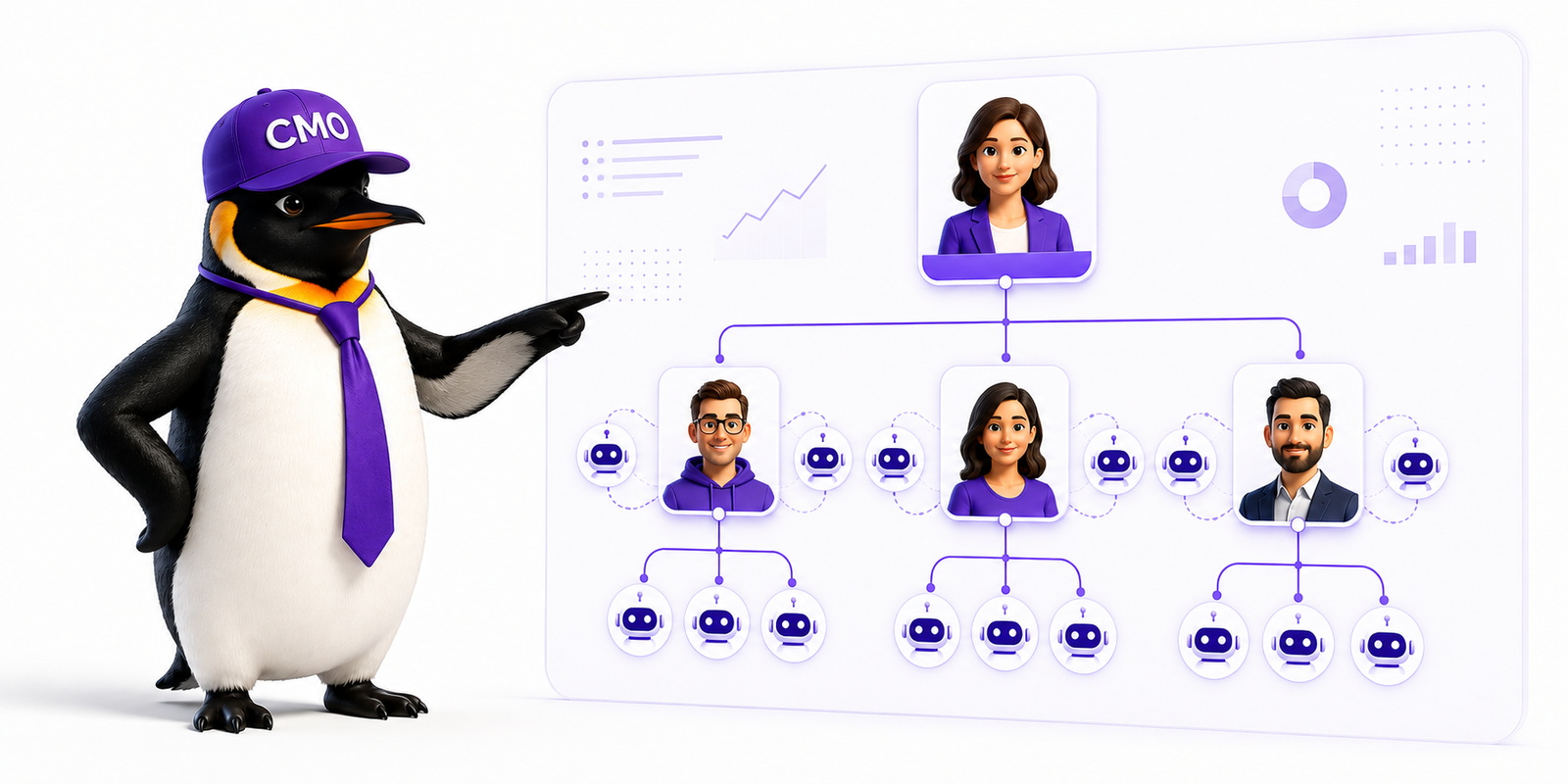
As AI agents start doing real marketing work, CMOs need to decide where they belong in the operating model. The answer may not be putting bots on the org chart, but leaders do need to make AI-driven work, accountability, governance, and human judgment visible before the invisible work becomes unmanageable.
Bots are just workflows, so they do not belong on an org chart. That was the argument from one CMO, and it produced a pin-drop moment.
It is a fair point. Giving agents titles, managers, and performance reviews could become org chart theater. It might even be a way to signal to investors that the company is tech-forward without changing much of anything.
But if agents are doing real work, influencing real outcomes, and changing how humans spend their time, should they show up somewhere?
That question has been haunting the Future of Marketing Org Design conversation. The better starting point may be this: before changing the org, reimagine the work.
If AI simply makes old work faster, the organization may gain efficiency without gaining growth. The bigger opportunity is to rethink the work itself.
What can be automated? What can be augmented? What can be eliminated? What can now be done that was previously impossible?
Those questions should precede any debate about where bots sit on the org chart. Otherwise, teams risk wrapping shiny new tools around stale work.
A lot of marketing leaders are deploying agents while the operating model stays the same. Same collaboration model. Same approval model. Same measurement model.
That is how you get AI-powered bureaucracy. Faster handoffs are still handoffs.
CMOs should look at how work moves, who makes decisions, where quality is checked, and how teams learn from results. AI agents can accelerate execution, but only a redesigned operating model can turn that speed into advantage.
Whether bots appear on the org chart or not, someone needs to own the outcome. Someone needs to own guardrails, quality, cost, governance, and business impact.
One useful image is a human lead with a cloud of agents around them. That keeps humans accountable while acknowledging that the work is no longer being done by humans alone.
What feels certain is that marketing orgs will look different soon. The savviest CMOs are preparing by mapping workflows, testing operating models, and deciding where human judgment matters most.
Do agents belong on the org chart? Maybe not literally.
But if they are doing work, they cannot remain invisible.
Not necessarily. But AI agent work should be visible in workflow maps, accountability models, and governance plans.
Reimagine the work. Decide what should be automated, augmented, eliminated, or newly possible before changing reporting lines.
A human leader should own outcomes, quality, guardrails, cost, and business impact. Bots should not become accountability escape hatches.
Keeping the same operating model while adding AI. That creates faster bureaucracy, not smarter marketing.
CMO Huddles helps B2B marketing leaders win by bringing together peers, fresh perspectives, and opportunities to build stronger personal brands. Want to join the huddle? Learn more about CMO Huddles and apply to join the community.