
Back to Blogs
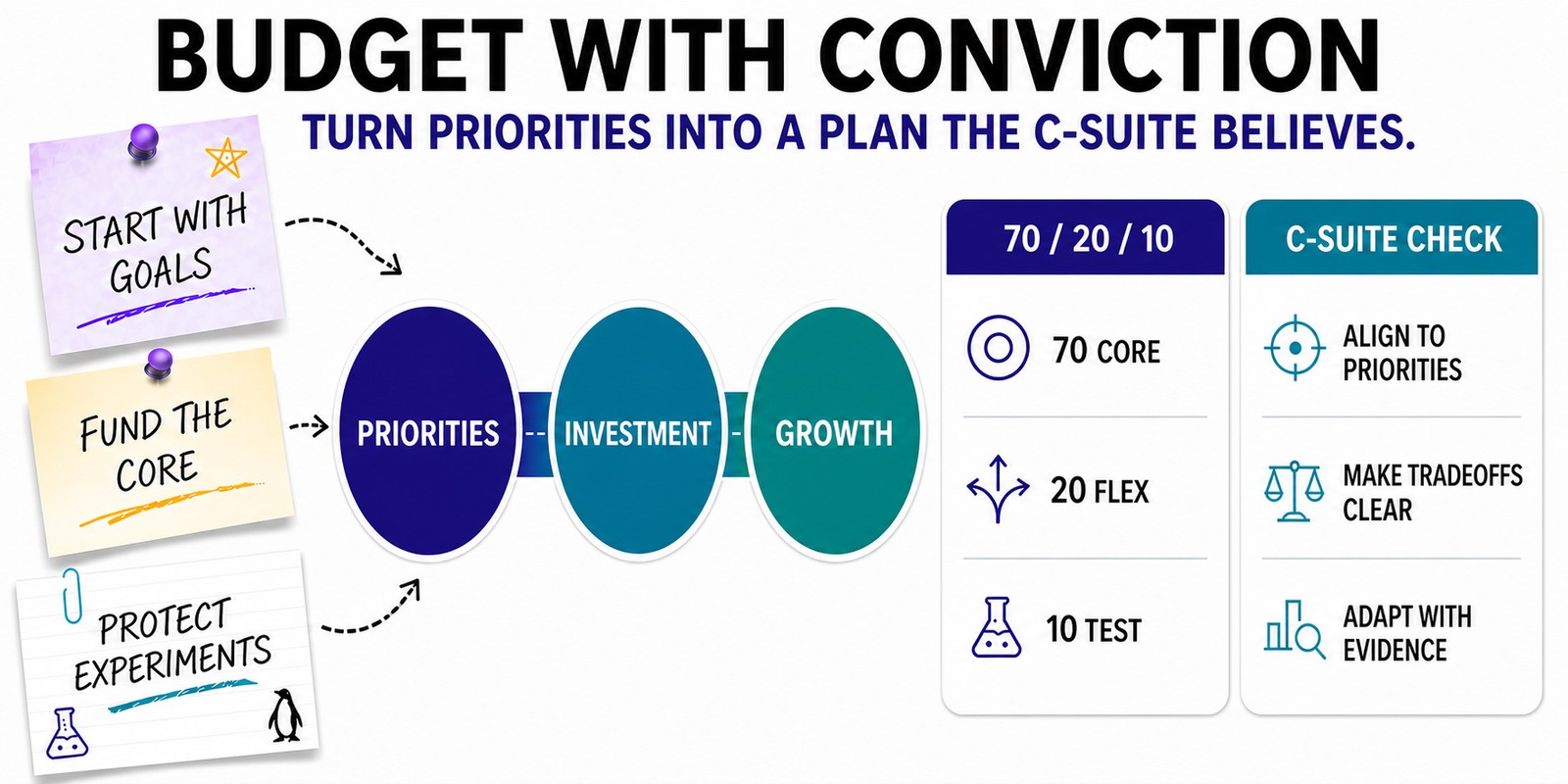
A credible 2026 marketing budget connects spending to business objectives, audiences, and long-running campaigns rather than mirroring the organization chart. Forrester’s Craig Moore explains how campaign-based allocation, lifecycle planning, and built-in flexibility can turn budgeting into a strategic conversation with the C-suite while giving marketing a clearer basis for prioritization, measurement, and confident investment decisions.
A marketing budget communicates more than expected spending. It reveals what the organization considers important, which audiences matter, and where leadership expects growth to come from.
That is why a budget built around last year’s allocations or the marketing organization chart can struggle in the C-suite. It explains where the money sits without necessarily explaining what the money is meant to accomplish.
In a CMO Huddles Bonus Huddle, Craig Moore, VP and Principal Analyst at Forrester, identified three recurring budgeting problems:
Together, these choices can reinforce internal silos and make marketing’s strategic contribution harder to see.
When budget ownership follows functional leadership, money is divided among areas such as demand generation, field marketing, brand, events, and communications.
That structure may feel orderly, but it creates friction when a strategic campaign needs support from several functions. Campaign leaders have to negotiate for resources that already belong to other teams.
Craig described an alternative: A
llocating more program spending to long-running campaigns organized around market segments and buyer needs.
The shift does not need to happen all at once. Some organizations move a portion of functional spending into campaign budgets first, then increase that allocation as the model proves itself.
This gives the people accountable for strategic initiatives greater control over the resources required to deliver them.
A credible budget makes the relationship between corporate priorities and marketing investment visible.
Craig recommends a plan-on-a-page approach that identifies the business objectives marketing supports and the corresponding initiatives receiving investment.
Those objectives may include:
This creates a clearer basis for discussing return. Instead of defending a list of tactics, marketing can show how each investment supports an agreed business outcome.
The budget becomes the numerical expression of the strategy.
Product-oriented budgets can fragment the customer experience. Each launch receives its own campaign, message, and spending request, even when several products serve the same audience.
Craig offered a different lens:
“Pivoting from a product orientation to an audience orientation gives you a whole new perspective on how to work with your markets.”
An audience-oriented campaign can represent several products while maintaining one coherent view of the buyer’s needs. It can also account for the full customer lifecycle rather than concentrating most spending on net-new demand.
That matters for established companies whose revenue may depend heavily on retention, expansion, and cross-sell.
Volatility makes false precision risky.
Economic conditions, tariffs, supply-chain changes, legal uncertainty, and shifting contract terms can alter which segments remain attractive during the year.
Craig’s plan-on-a-page includes a prioritized “will do, will not do” list with a visible cut line. If circumstances change, the organization already knows which investments move above or below that line.
This is different from treating the entire budget as temporary. Brand and reputation investments, for example, often take longer to build and redirect. Flexibility works best when leadership understands which investments can change quickly and which require continuity.
AI belongs in the budget when it is tied to defined work and measurable value.
Potential value may come from:
A blanket promise of greater productivity is difficult to defend. A specific commitment to shorten a workflow, improve conversion, or reduce duplicated agency work gives the C-suite something concrete to evaluate.
Craig also cautioned against assuming every innovation automatically lowers total cost. New technology may change the work people perform without making the organization less busy.
The stronger budget story connects AI investment to a specific operating or business outcome.
A budget the C-suite believes does not eliminate uncertainty. It shows how marketing is choosing within it.
The most credible plans make four relationships easy to see:
That structure gives CEOs and CFOs a clearer view of what marketing is funding, why it matters, and what may change if conditions shift.
A strategic marketing budget connects spending to business objectives, priority audiences, customer needs, and long-running initiatives rather than simply repeating last year’s departmental allocations.
Functional leaders control separate pools of money, while strategic campaigns often need resources from several functions. That can make cross-functional work slower and less accountable.
A prioritized “will do, will not do” list can identify which investments remain protected and which can change if market conditions or company priorities shift.
AI investment is easier to evaluate when it is connected to a defined workflow, capability, cost, or business outcome instead of a general productivity promise.
Listen to the full conversation with Craig Moore about budgeting with conviction.
CMO Huddles helps B2B marketing leaders win by bringing together peers, fresh perspectives, and opportunities to build stronger personal brands. Want to join the huddle? Learn more about CMO Huddles and apply to join the community.