
Back to Blogs
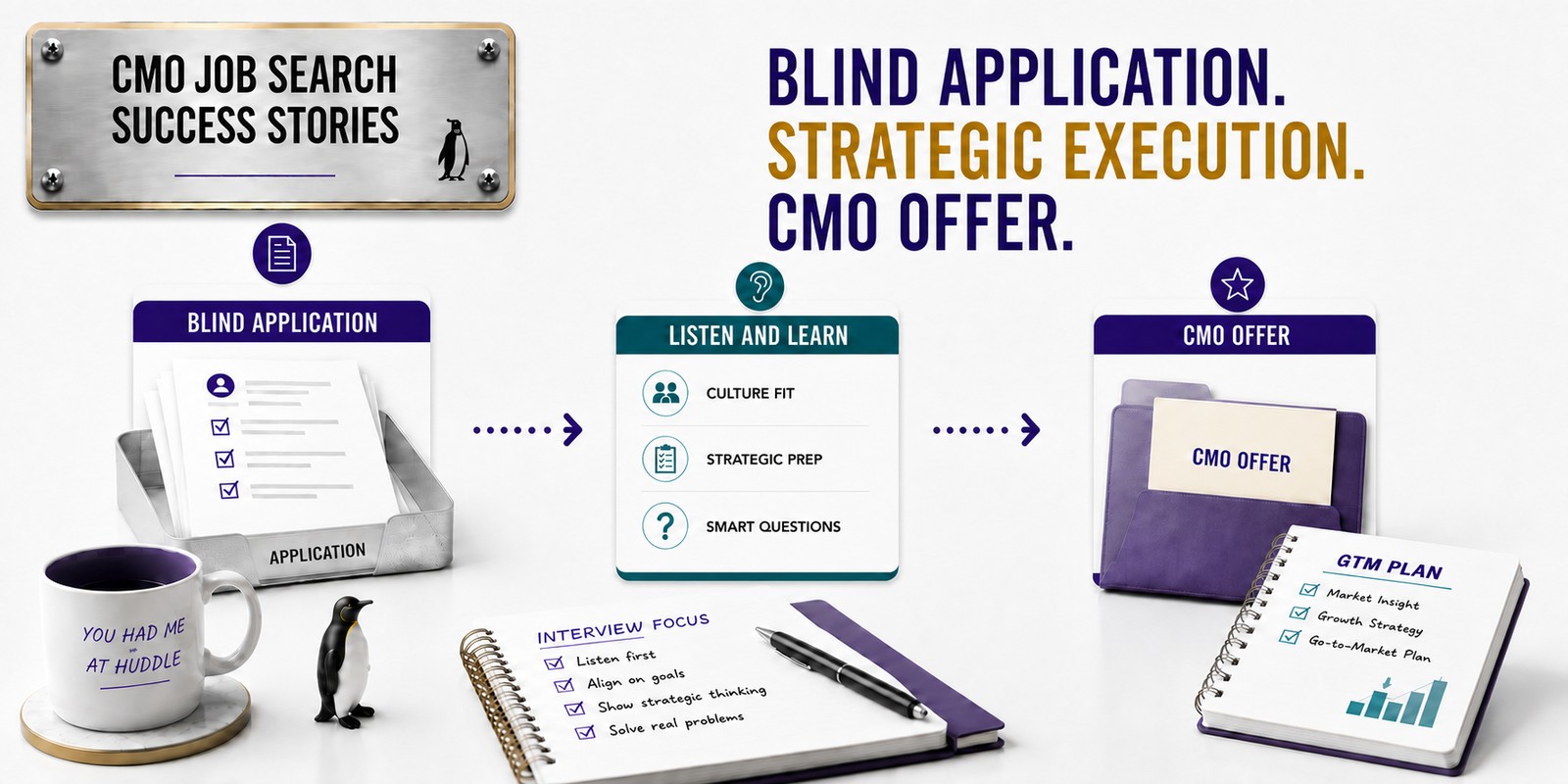
One Huddler landed a CMO role through a blind LinkedIn application, an uncommon result that became possible when another process reopened. The application created access, but deep listening, cultural alignment, thoughtful preparation, and careful negotiation won the offer. The story is a reminder that unlikely leads still require a disciplined, relationship-aware executive search strategy overall.
Blind online applications are rarely the strongest source of senior executive opportunities.
This one worked.
After taking more than a month away from the market, the Huddler applied to an unnamed company through an external recruiter’s LinkedIn posting. Two weeks later, the recruiter reached out.
The process did not advance immediately. The Huddler entered serious consideration only after the company’s original finalists fell through.
The application opened the door. Everything that followed determined the result.
The Huddler pursued several kinds of opportunities, including PE-backed and VC-backed companies. The accepted role was with a large, privately held cybersecurity company without outside investment.
Although the winning lead came from LinkedIn, the broader search was not built around mass applications. The Huddler evaluated leadership style, organizational fit, and the company’s appetite for change.
That distinction matters. The lesson is not that blind applications are suddenly reliable. It is that a low-probability lead can become meaningful when the opportunity and the executive are well matched.
Early conversations revealed that previous candidates had appeared overly confident and insufficiently attentive to the organization they hoped to lead.
The Huddler adjusted accordingly.
“Being a sponge beats being a hammer.”
Rather than arriving with a rigid prescription, the Huddler listened for what the company valued, how leaders viewed change, and what had gone wrong in earlier interviews.
That approach also helped offset limited category experience. The company placed greater value on strategic thinking, change leadership, and cultural alignment than on having held the same role in the same market.
The process included initial Zoom interviews with the CEO and sponsoring executive, four additional stakeholder conversations, and an intensive on-site day with approximately ten leaders.
Throughout the process, the Huddler took detailed notes and used GenAI to accelerate research into competitors, ICPs, positioning, and messaging.
Before the final interviews, the Huddler prepared a strategy document without being asked. It was not presented as a finished answer. It showed how the candidate organized information and approached the business.
That distinction kept the document from becoming a generic consulting exercise. It supported the conversations already taking place and demonstrated initiative grounded in listening.
The company was evaluating more than marketing expertise. Its leaders wanted evidence that the incoming CMO could listen, integrate, and lead change without dismissing the existing organization.
The Huddler’s approach reflected those priorities across each interaction.
By the on-site stage, the process had become an assessment of mutual fit across the leadership team. The concentrated schedule also allowed the Huddler to compare perspectives from different functions and observe how the company operated.
Because the privately held company did not offer equity, compensation centered on base salary and bonus.
The Huddler asked for:
The offer did not include severance. The Huddler chose not to press aggressively on that point because of the package’s other strengths and the perceived stability of the business.
The negotiation reflected the same listening-first approach as the interviews: Understand the structure, clarify the risk, and focus on the terms that mattered most.
The online application was unusual, but it was only the first step.
The stronger lessons came later:
A blind application created the introduction. Readiness converted it into an offer.
It can, but the source story describes it as unusual. The Huddler had achieved only one similar result earlier in their career.
Approximately two to two and a half months passed between the first interview and the offer.
Deep listening, cultural awareness, strategic preparation, and the ability to lead change without imposing a predetermined playbook.
The Huddler used it to accelerate competitor research, ICP mapping, messaging analysis, and positioning preparation.
CMO Huddles has a dedicated Transition Team for experienced B2B marketing executives navigating what comes next.