
Back to Blogs
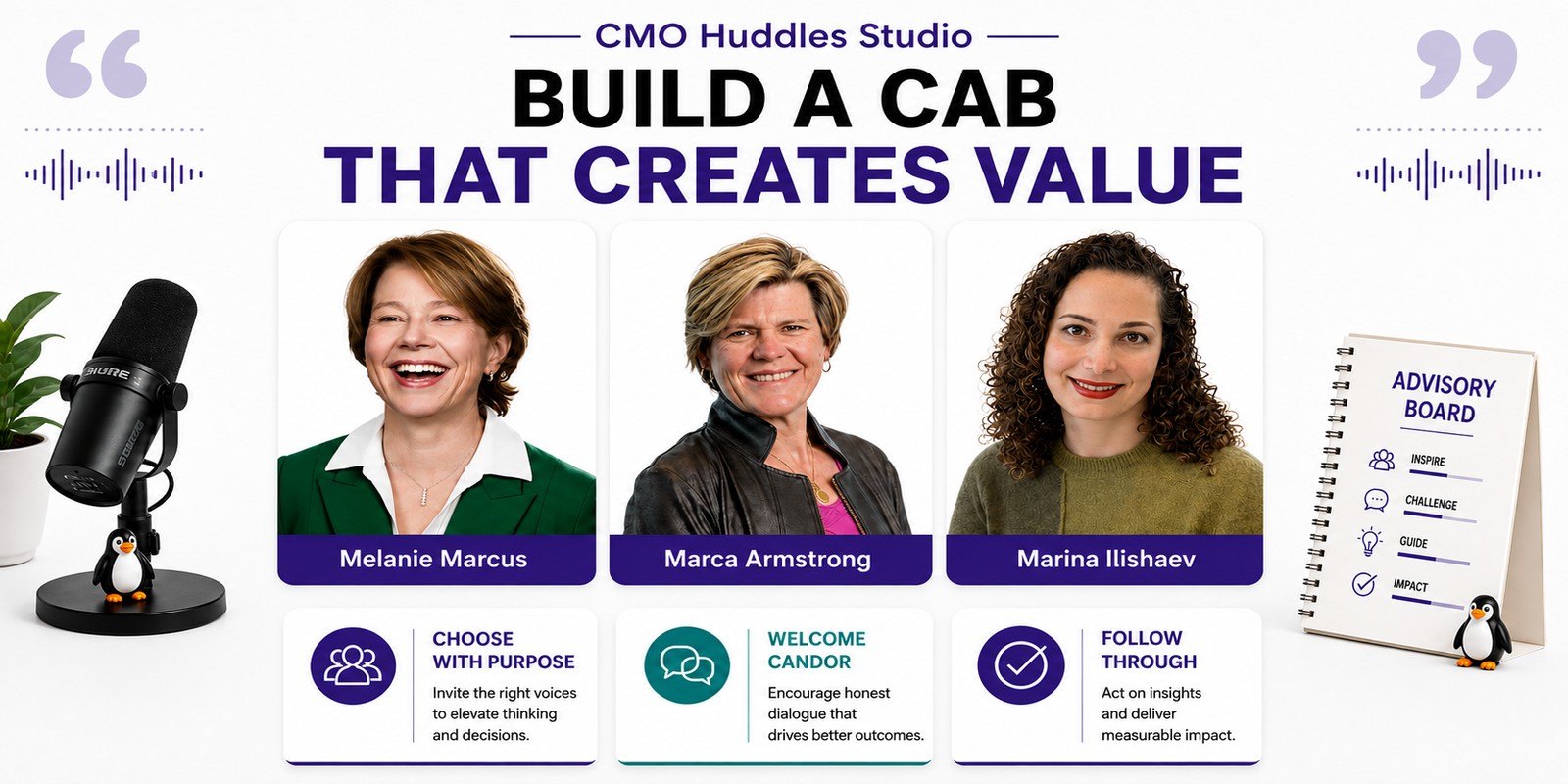
Customer advisory boards create more value when they operate as ongoing relationships rather than isolated meetings. Melanie Marcus, Marca Armstrong, and Marina Ilishaev connect clear purpose, thoughtful membership, candid discussion, executive participation, and year-round follow-through. Their experiences show how a well-structured CAB can strengthen customer trust while informing product, retention, advocacy, company strategy, and decisions.
Customer advisory boards can inform product strategy, deepen relationships, and create customer advocates. Those outcomes are less likely when the CAB is treated as a one-time executive event.
In a CMO Huddles Studio conversation, Melanie Marcus, then Chief Marketing and Customer Experience Officer at Surescripts, Marca Armstrong, then Head of Marketing and Customer Success at Sensera Systems, and Marina Ilishaev, then Chief Marketing and Operating Officer at Boardstream AI, explored what gives a CAB lasting value.
A CAB may support several business priorities, including product direction, customer retention, market expansion, advocacy, and strategic planning. A clear primary purpose helps determine who belongs in the room and what the agenda needs to accomplish.
Melanie described CABs as a way to build deeper relationships with strategic customers while giving those customers meaningful engagement in company strategy.
Executive participation also signals that the organization values the conversation. The CEO and other leaders can hear customer feedback directly rather than receiving a filtered summary after the meeting.
A representative mix of customers can produce more useful feedback than a board composed only of the largest accounts. Company size, industry, use case, maturity, and strategic importance may all shape the group.
The individual participant matters just as much. Effective members tend to be strategic thinkers who are willing to prepare, speak candidly, and engage with other members.
“We want controversy, because controversy in the advisory council is way better than controversy in the market.”
A charter can clarify participation expectations, meeting dates, confidentiality, and the member’s role.
Customers may join partly for access to company leadership, but peer connection often becomes an equally important benefit. Thoughtful seating, open discussion, networking time, and useful previews can make participation worthwhile.
Marca connected CAB input to the company’s ability to evolve:
“Customer feedback is the only way you’re going to ultimately succeed.”
A CAB can give customers early visibility into a roadmap or strategic issue. In return, the company gains context that may influence product, support, customer success, and go-to-market decisions.
Marina focused on the relationship between formal meetings:
“If you are engaging with them throughout the year, they are a lot more invested in the success of the business.”
Between-meeting engagement may include focused feedback sessions, roadmap discussions, peer introductions, webinars, working groups, or updates explaining how member input affected a decision.
The company does not need to implement every recommendation. Closing the loop can clarify what was heard, what changed, and why other suggestions were not adopted.
A CAB is a structured group that provides customer perspective on company strategy, products, markets, and customer experience.
The appropriate size varies, but the speakers found that approximately eight to twelve active participants can support meaningful conversation.
Many CABs combine periodic formal meetings with smaller touchpoints throughout the year.
Measures may include participation, retention, product influence, references, advocacy, strategic introductions, and completed follow-up actions.
Listen to the full customer advisory board conversation.
CMO Huddles helps B2B marketing leaders win by bringing together peers, fresh perspectives, and opportunities to build stronger personal brands. Want to join the huddle? Learn more about CMO Huddles and apply to join the community.