
Back to Blogs
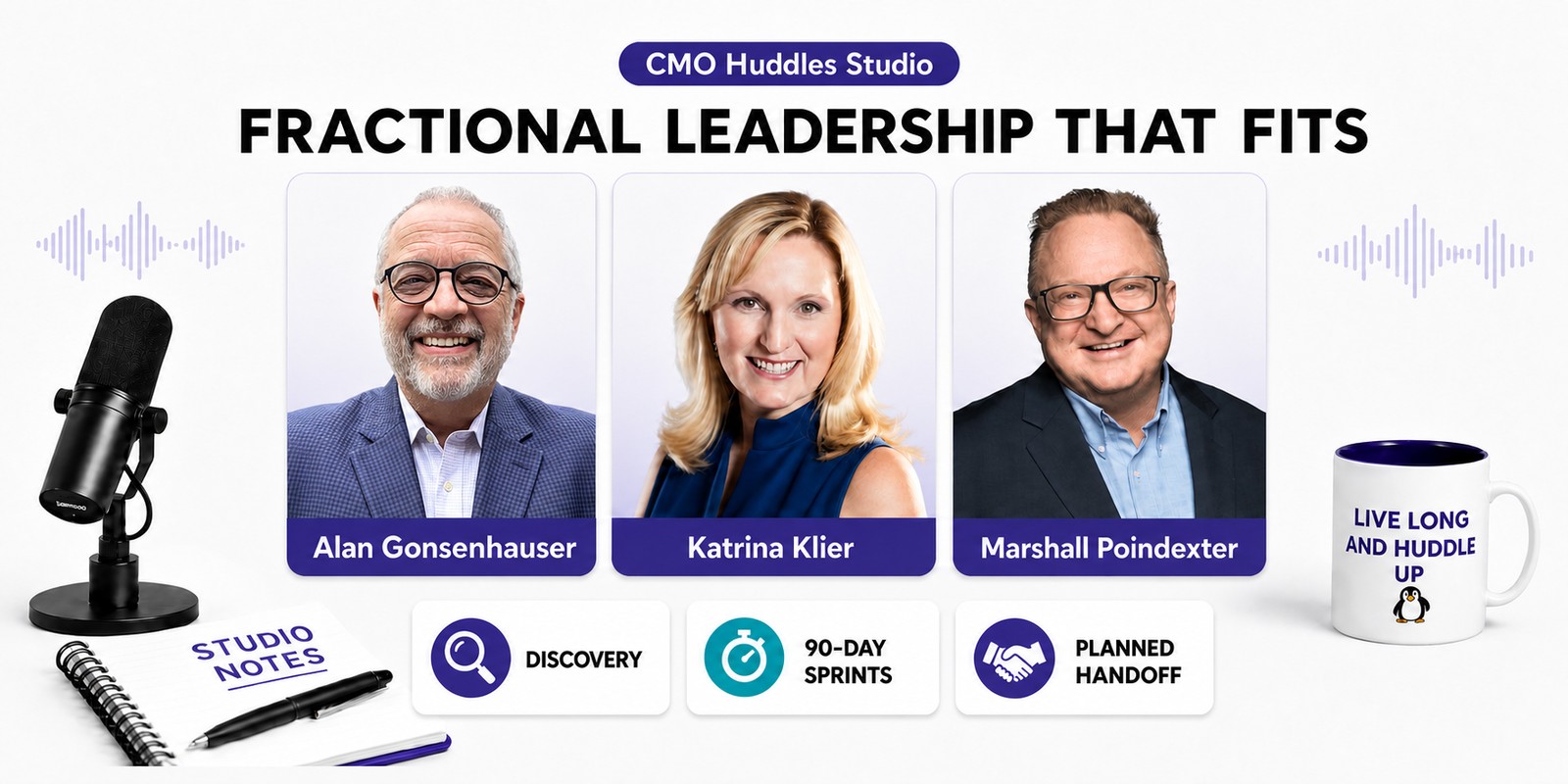
Fractional CMO work combines executive accountability with a limited schedule, while consulting more often centers on advice or a defined deliverable. Alan Gonsenhauser, Katrina Klier, and Marshall Poindexter explain how discovery, financial alignment, 90-day sprints, clear scope, and planned handoffs help fractional leaders create momentum without allowing part-time engagements to quietly become full-time roles themselves.
The words “fractional CMO” and “marketing consultant” are often used interchangeably.
The distinction matters because the two models create different expectations.
A consultant generally advises, analyzes, or delivers a defined project. A fractional CMO joins the leadership system, assumes responsibility for marketing direction, and helps the organization execute through employees, agencies, and partners.
In a CMO Huddles Studio conversation, three former full-time CMOs compared how they operate as fractional leaders:
Their approaches differ, but all three emphasized discovery, focus, executive alignment, and a clear path to handoff.
Alan spends approximately a month listening before making significant changes.
He interviews marketing employees, C-suite leaders, and board members. Each person receives “three magic wishes,” an invitation to describe what they would change if they could.
“I don’t want to come on like a ton of bricks. I want to listen to people first and see what they’re proud of and see what the gaps are.”
This provides more than a list of problems. It reveals which accomplishments matter internally, where leaders disagree, and what the organization expects from marketing.
The discovery period also protects the fractional leader from applying a familiar playbook before understanding the business.
Katrina begins with the targets already presented to the board.
Revenue, margin, profitability, and growth commitments create the context for marketing priorities. If marketing’s proposed work cannot be connected to those commitments, it may be difficult to protect within a limited engagement.
“I often find that when you’re not a full-time employee, people tell you more.”
That outside-inside position can be an advantage. A fractional leader may hear concerns that employees hesitate to share through the normal reporting structure.
The access is useful only when it builds trust and alignment rather than creating another source of internal tension.
Fractional work often happens within approximately 10 to 15 hours per week.
That model depends on process. Without clear priorities, a part-time role can quietly absorb full-time expectations.
Marshall uses 90-day sprints to define:
New requests are evaluated against the agreed sprint instead of entering an unlimited queue.
This structure gives the CEO and fractional leader a shared basis for deciding what changes and what waits.
A fractional CMO can fit when the company needs executive marketing leadership but does not yet need, or cannot support, a permanent full-time CMO.
A consultant may be a better fit when the company needs:
A fractional CMO may be better suited when the business needs:
The right model depends on the organizational gap, not the attractiveness of the title.
A fractional engagement is not necessarily intended to continue indefinitely.
The company may eventually hire a permanent CMO, build enough internal leadership capacity, complete a transformation, or change strategic direction.
Planning for that transition can include:
A clean handoff demonstrates that the fractional leader built organizational capacity rather than personal dependency.
A fractional CMO generally assumes ongoing executive responsibility and helps lead execution. A consultant more often advises or completes a defined project without joining the leadership team.
The commitment varies, but limited weekly schedules work best when the engagement has clear scope, priorities, cadence, and decision rights.
It can fit when a company needs experienced marketing leadership but is not ready for a full-time CMO or needs interim leadership during a transition.
Duration varies by objective. Some engagements run through focused 90-day sprints, while others continue until a permanent leader is hired or the organization reaches a defined milestone.
Listen to the full conversation with Alan, Katrina, and Marshall.
CMO Huddles helps B2B marketing leaders win by bringing together peers, fresh perspectives, and opportunities to build stronger personal brands. Want to join the huddle? Learn more about CMO Huddles and apply to join the community.