
Back to Blogs
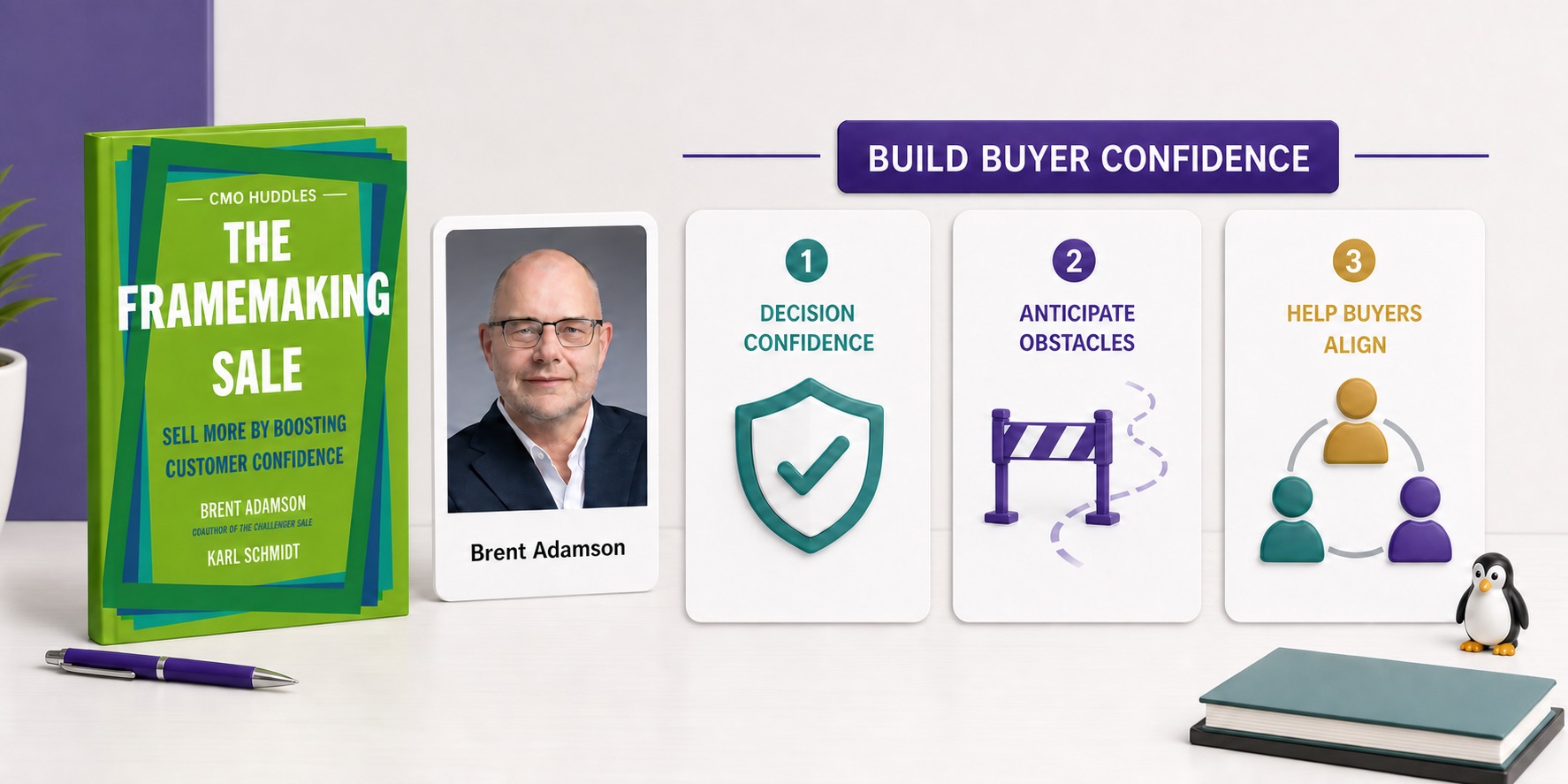
Complex B2B purchases stall when buyers lack confidence in their own decision process, not simply when they distrust a supplier. Brent Adamson’s Framemaking Sale gives marketing and sales another role: Anticipate hidden obstacles, reduce anxiety, organize overwhelming information, and provide supplier-agnostic tools that help buying groups ask better questions, navigate tradeoffs, and decide with confidence.
Complex B2B deals do not always stall because buyers distrust the vendor. They often stall because buyers no longer trust their own ability to make the right decision.
That distinction sits at the center of The Framemaking Sale by Brent Adamson. In his conversation with Drew Neisser, Brent explains why the abundance of information available to buying groups can create uncertainty rather than clarity.
“The single biggest opportunity to drive growth for your business is not to build customer's supplier trust, but to build customer's self-trust.”
For B2B marketing leaders, this reframes the role of content, enablement, and customer insight. The goal is not simply to make the supplier easier to choose. It is to help the buying group feel more capable of making a sound decision.
Buying groups encounter competing priorities, unfamiliar processes, internal politics, and a growing volume of information. Even when they recognize a problem, they may not know how to evaluate possible solutions or move the decision through procurement, legal, finance, and leadership.
Brent describes a shift from helping sellers advance a sale to helping buyers navigate a decision.
“Our goal isn't to move sellers through a sale. It's to move buyers through a decision.”
Marketing can contribute by making the decision process easier to understand. That might include revealing common obstacles, clarifying tradeoffs, providing evaluation frameworks, and showing how similar organizations reached internal alignment.
Much of what appears to be educational content still directs the buyer toward one company’s product. Buyers recognize that intent.
Brent argues that stronger guidance can be supplier agnostic. It can help the customer understand the decision even if that understanding does not immediately lead to a sale.
“The vast majority of what we do in the name of customer centricity is simply supplier centricity with a thin veneer of customer layered over top of it.”
Examples might include:
These assets can build trust because they make the buyer more capable, not merely more informed about a product.
Suppliers often possess pattern recognition that individual buyers do not. They have seen where similar decisions become stuck, which stakeholders enter late, and what concerns create internal resistance.
Brent calls one way of collecting this knowledge an “It Turns Out That Audit.” Marketing and sales examine completed and stalled opportunities to uncover the issues customers discovered only after entering the buying process.
Those patterns can inform content, sales conversations, and enablement tools. Instead of waiting for an obstacle to appear, the organization can help buyers prepare for it earlier.
The language matters. “In working with other customers like you” opens a coaching conversation without pretending every company follows the same path.
A complicated purchase can mean something different to each stakeholder. Finance may see risk. Operations may see disruption. An executive sponsor may see growth. An end user may see another workflow change.
Framemaking helps the group organize those perspectives around a shared understanding of:
Marketing can support that process with tools that travel across the buying committee. The most useful materials give an internal champion language, evidence, and structure for conversations that happen when the vendor is not in the room.
Framemaking helps buyers organize complexity, evaluate tradeoffs, and develop confidence in their own decision process.
Marketing can surface hidden obstacles, create supplier-agnostic tools, and give buying groups frameworks they can use to align internally.
Product marketing explains why an offering matters. Framemaking also helps the customer understand the decision itself, including its risks, stakeholders, and tradeoffs.
Want to hear more? Listen to the full conversation with Brent Adamson.
CMO Huddles helps B2B marketing leaders win by bringing together peers, fresh perspectives, and opportunities to build stronger personal brands. Want to join the huddle? Learn more about CMO Huddles and apply to join the community.