
Back to Blogs
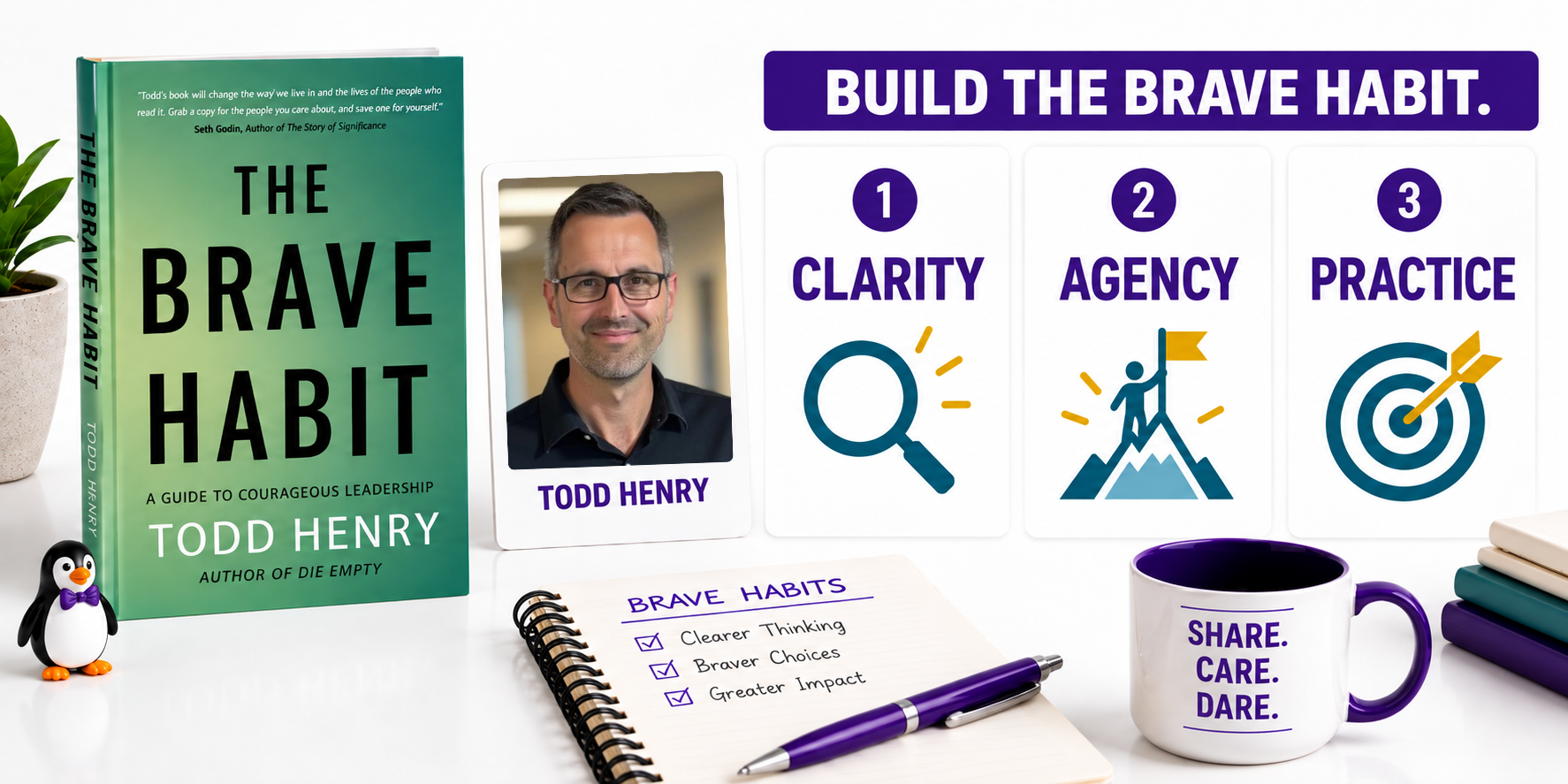
Bravery is a habit CMOs can build. Drawing on Todd Henry’s The Brave Habit, these four practical applications show how to explain difficult decisions, set clear boundaries around risk, give teams meaningful ownership, and schedule uncomfortable conversations. The goal is to lead with clarity and deliberate action when pressure makes the next move feel uncertain.
Henry puts the need for transparency plainly: “They need to understand not just where we're going, but why we're going there. And they need you to invite them into your decision-making process.”
Try applying that to a budget shift. Before announcing that an established program will lose funding, write down the business problem, the evidence behind the change, and the trade-off you’re accepting. Invite the people closest to the work to challenge the assumptions.
For example, a field marketer may know that the event you’re about to cut supports a handful of strategic accounts whose opportunities haven’t reached the dashboard. That information might change the decision, or simply change how you protect those relationships.
Either way, give the team a reason they can examine. A beautifully formatted allocation spreadsheet can wait.
Henry cautions against equating bravery with immediate action. Sometimes holding your position is the considered choice.
For a CMO, one useful application is to separate approving an experiment from approving a permanent commitment. Suppose you want to test a new executive community program. Start with a defined audience, a spending limit, an accountable owner, and a date to review what you learned.
Decide in advance what would justify another round. If the objective is to build relationships with target accounts, attendance alone won’t answer the question; ask whether the right people participated and whether meaningful follow-up happened.
Also name the condition that would make you stop. A promising idea shouldn’t acquire lifetime tenure because nobody enjoys the meeting where it gets retired.
Henry also encourages leaders to understand what motivates individuals, rather than assuming everyone responds to the same incentives.
That suggests a better conversation before handing someone a stretch assignment. Ask which part of the work interests them, where they need support, and which decisions they feel ready to make. You may discover that a capable team member wants a sounding board for an unfamiliar stakeholder, not another approval step.
Then make the boundaries explicit. If your demand generation lead owns a pilot, specify which changes they can make independently and which require discussion. A named owner needs enough authority to do something with the title.
Henry recommends building the Brave Habit: block time, review tensions, claim agency, reaffirm vision, and engage so leaders can discern true risk from perceived risk, sometimes planting their feet instead of rushing. We can bring these ideas into a weekly routine.
To try it in your own week, choose one unresolved decision and write a short note: what’s at stake, what information is missing, who needs to participate, and when you’ll take the next step. Keep it short enough that maintaining the note doesn’t become your newest avoidance strategy.
Perhaps you’ve been postponing a conversation about a campaign that keeps missing its goal. Your next step might be a review with the owner, using agreed performance measures and a specific decision date. You don’t have to settle every question in that first meeting.
Afterward, record what you decided and when you’ll revisit it. Over time, that record can help you spot your own habits: where you ask for useful evidence, where you keep reopening settled questions, and where you let an uncomfortable conversation drift.
Describe the problem, the available evidence, and the assumptions behind your choice. Set a review point and explain what new information would cause you to reconsider. That gives colleagues something concrete to assess and act on.
Specify the audience, spending limit, owner, review date, and criteria for continuing or stopping. Include any customer or brand commitments that the experiment must respect. Agree on those boundaries before the work begins.
Discuss the person’s experience, interests, and support needs, then agree on the decisions they can make independently. Arrange a useful check-in with a clear purpose, such as reviewing early feedback or resolving an obstacle.
Select one decision that has lingered longer than it should. Identify the next conversation or piece of evidence it needs and put that step on the calendar with an owner. Start small enough to follow through this week.
Todd Henry is a global keynote speaker, advisor, & best-selling author whose work explores creativity and leadership. He hosts the Daily Creative podcast and wrote The Brave Habit: A Guide to Courageous Leadership.
Want to hear more? Listen to the full conversation on Renegade Marketers Unite.