
Back to Blogs
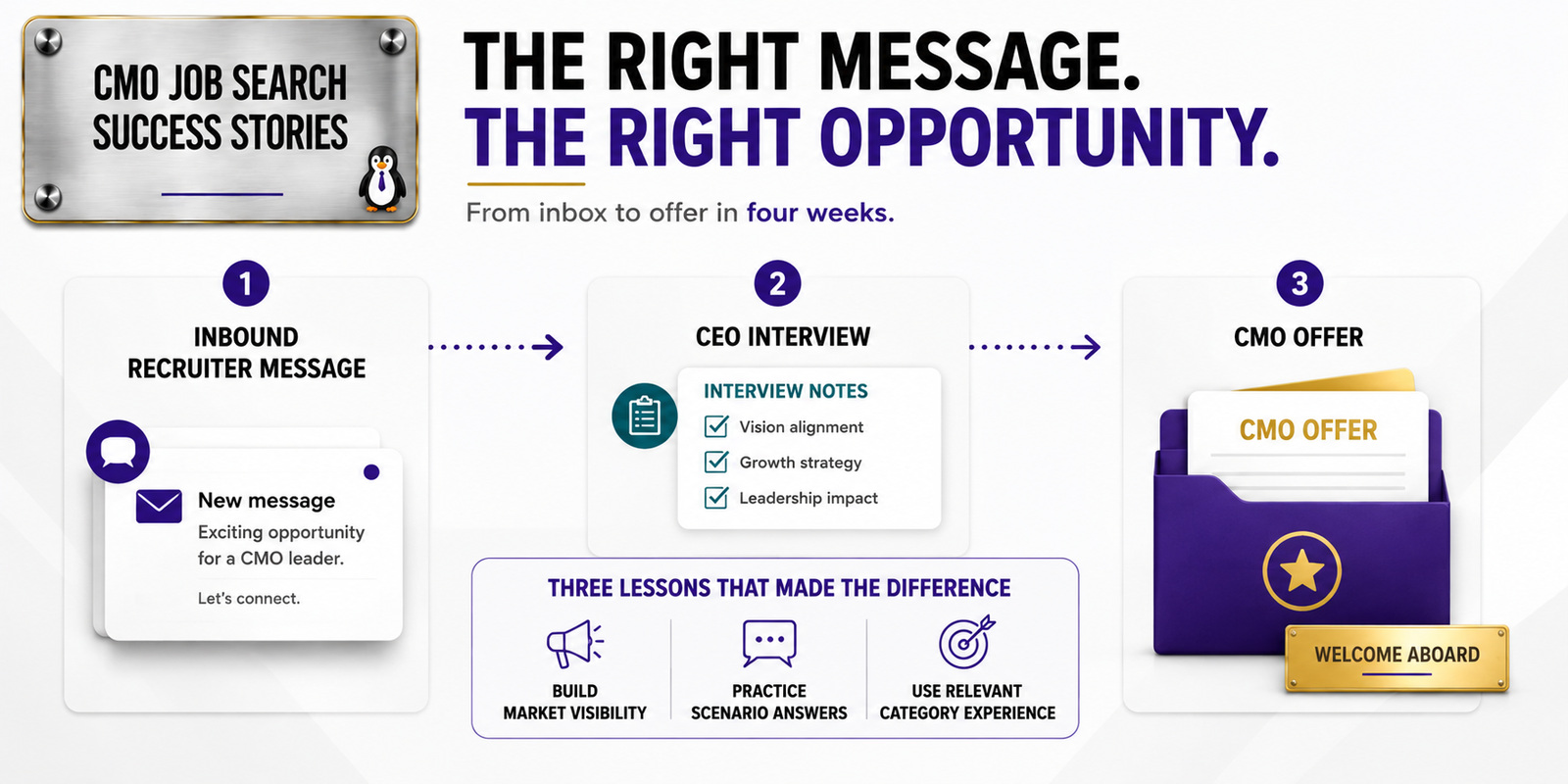
One Huddler turned an inbound recruiter message into a CMO offer within four weeks. Existing visibility in the private-equity network and relevant vertical experience helped accelerate the process, while interview practice strengthened scenario-based answers. The story shows how market credibility, recruiter relationships, and focused preparation can position senior marketers to move quickly when the right opportunity appears.
One Huddler was not expecting this particular opportunity when a recruiter specializing in the K-12 market reached out on LinkedIn.
Three to four weeks after the first interview, he had an offer to become CMO of a midsize education technology company.
The recruiter opened the door, but the Huddler was not entering the process as a complete unknown. The company already knew of him through its private-equity network, and his experience came from the same vertical.
That familiarity helped create a much faster process than many executive searches. After a strong conversation with the CEO shortly before the CEO left for vacation, the company shortened the remaining process. No presentation was required.
Search Snapshot
The opportunity began with an inbound LinkedIn message, but the Huddler's existing reputation also mattered.
The company already knew of him through its private-equity network, giving the hiring team context beyond what appeared on his profile. His experience in the same vertical provided another recognizable connection.
That combination helped make an unexpected recruiter message more actionable. The recruiter could introduce someone whose background already made sense for the market, while the company had existing awareness of the executive.
For CMOs, an inbound opportunity can therefore reflect work done long before the message arrives. Category experience and relationships across an investor or industry network can make an executive easier to recognize when a role opens.
The Huddler prepared for interviews with a Chief People Officer from his previous company, focusing specifically on best practices for answering scenario questions.
That preparation gave him an opportunity to practice before the actual stakes of the interview.
Scenario questions ask candidates to move beyond accomplishments and explain how they think through situations. Practicing those responses with someone experienced in evaluating leaders can help an executive identify which examples communicate judgment most clearly.
The source does not detail the specific questions asked during the eventual CMO process, but the Huddler identified this preparation as one of the lessons from his search.
The Huddler's interview with the CEO became a turning point.
The conversation happened shortly before the CEO left for vacation and went well enough that the CEO shortened the process. The company also decided that no presentation was necessary.
That reduced the number of hurdles between the candidate and the offer.
The speed did not come from one factor alone. The Huddler had relevant vertical experience, the company already knew of him through the PE network, and the CEO gained enough confidence during their conversation to accelerate the decision.
Together, those factors moved the process from first interview to offer in approximately three to four weeks.
Another lesson from the Huddler's search concerned the way private-equity firms build relationships with executives.
He observed that many PE firms have talent coordinators who reach out to executives to build their rosters, conduct interviews, and check references.
Those conversations may happen before a specific role is available. Their value can emerge later, when a portfolio company needs a leader with a particular background.
This search shows why those relationships can matter. The company already knew of the Huddler through its PE network before the recruiter-led process began. That existing awareness gave the eventual hiring process a stronger starting point.
Not every process the Huddler pursued that summer reached a decision.
Two other opportunities were put on hold because of market conditions.
Those pauses were separate from the EdTech opportunity that ultimately produced an offer, but they illustrate how quickly executive searches can change for reasons outside a candidate's control.
A promising process can stop while another accelerates. In this case, two opportunities stalled while an inbound recruiter message turned into a CMO offer in less than a month.
That contrast is another reason senior marketers benefit from maintaining multiple relationships and conversations during a search rather than assuming that the opportunity furthest along will necessarily be the one that closes.
The Huddler's path to the CMO role brought together several advantages that had developed before and during the process.
A specialized recruiter surfaced the opportunity. Relevant vertical experience gave the recruiter an obvious reason to make the connection. Existing recognition within the private-equity network meant the candidate was not entirely new to the company. Practice with a former Chief People Officer strengthened interview preparation.
Then the CEO conversation created enough confidence to accelerate the remaining process.
None of those elements guarantees a three-to-four-week executive search. Together, they show how preparation and professional visibility can make a candidate easier to evaluate when timing and opportunity align.
This Huddler was contacted by a recruiter specializing in his market and was already known within the company's private-equity network. Relevant category experience and professional visibility can make an executive easier to identify when a matching role emerges.
The Huddler observed that many PE firms use talent coordinators to build executive rosters, conduct interviews, and check references. Those relationships can create familiarity before a specific portfolio-company opportunity becomes available.
This Huddler practiced with a former Chief People Officer, focusing specifically on best practices for scenario questions. Practicing with someone experienced in evaluating executives can help candidates sharpen how they communicate their thinking.
Yes. This process took approximately three to four weeks from first interview to offer. Existing market familiarity and a strong CEO interview helped accelerate the process, and no presentation was required.
Read the original CMO Job Search Success Story.
CMO Huddles supports experienced B2B marketing executives through its dedicated Transition Team, peer connections, practical search resources, and shared executive experience.