
Back to Blogs
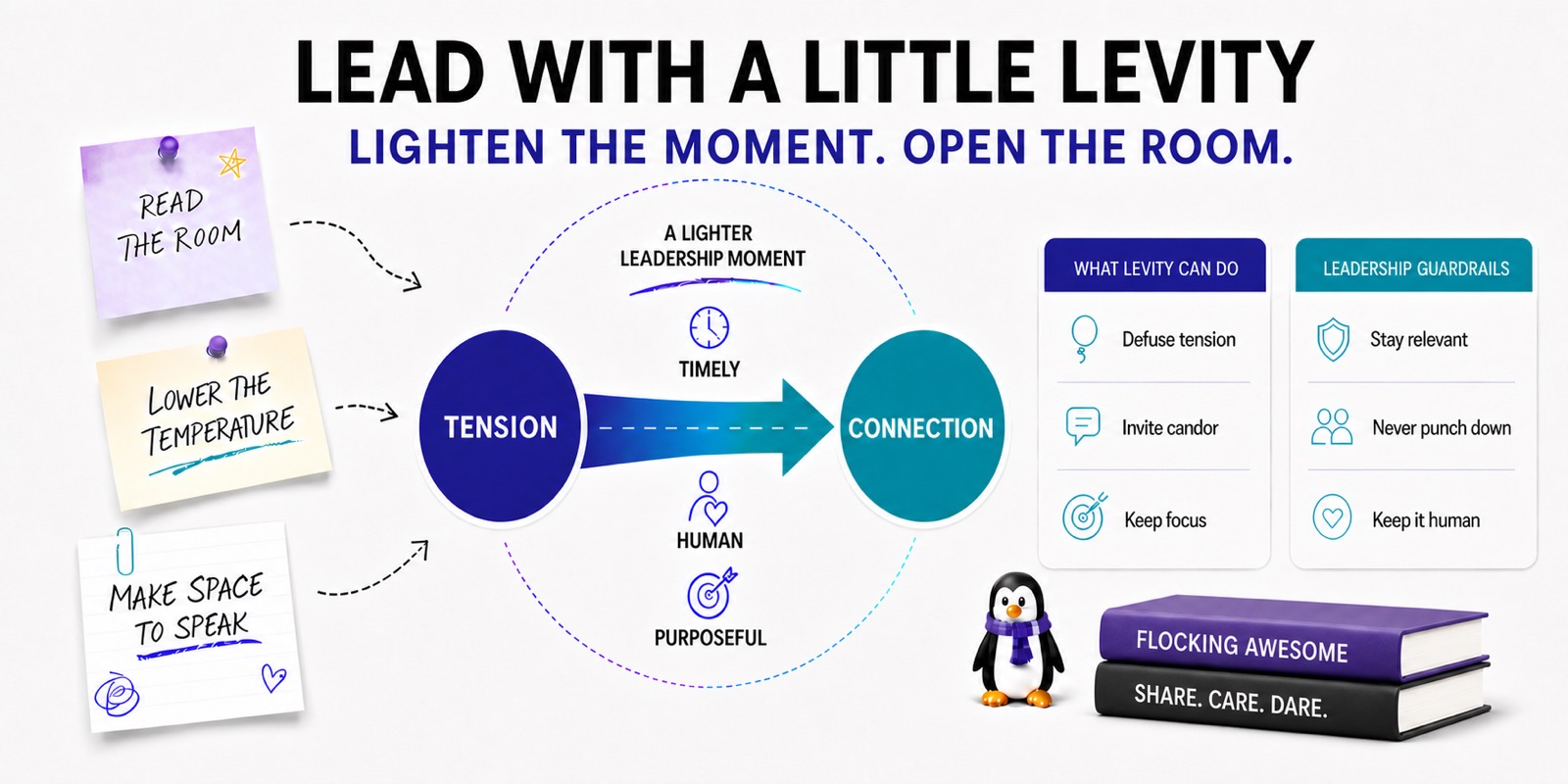
Humor can make leadership more human without turning a CMO into a comedian. Jan McInnis explains how small, situational moments of levity can lower tension, improve communication, and make leaders more approachable. The useful discipline is reading the room, noticing humor already present, starting small, and avoiding jokes that target people or undermine trust carelessly.
Humor at work does not require jokes, a comedy routine, or a naturally outgoing personality. Often, it is simply a moment of lightness that lowers tension and reminds a team that its leader is human.
That is how Jan McInnis, a comedian, keynote speaker, and founder of The Work Lady, frames humor as a leadership tool.
Her advice offers B2B marketing leaders a low-pressure alternative to the permanent poker face: Notice the humor already present, read the room, and begin with small moments that fit the situation.
“It's a muscle. Start looking around. There's humor all around you. We're just not paying attention to it.”
Workplace humor serves a different purpose from stand-up comedy. The goal is not to produce a room full of laughter. It is to help people relax, connect, and receive a message more openly.
“You're not trying to make everyone fall out of their seats laughing. You want to just use a little bit of light humor.”
That lightness might come from acknowledging an awkward moment, finding a playful way to introduce a routine update, or commenting on something the group has already noticed.
This approach removes the pressure to perform. The leader is not trying to become the funniest person in the meeting. The leader is creating a more comfortable setting for communication.
Marketing teams regularly navigate tight deadlines, shifting priorities, executive scrutiny, and ambitious expectations. Humor cannot resolve those pressures, but it can acknowledge them without making the moment heavier.
A brief, appropriate comment can help a team reset before discussing difficult news or working through a tense decision. It can also signal that the leader understands how the situation feels.
The key is laughing with the team, not at someone on the team. Humor aimed at an individual, identity, mistake, or sensitive subject can weaken trust quickly.
The same comment can land differently across teams, cultures, and circumstances. Jan emphasizes awareness of the audience and context.
Humor may help when:
A joke can backfire when it targets someone with less power, minimizes a serious issue, relies on cultural assumptions, or redirects attention toward the leader.
Reading the room is what separates useful levity from a risky performance.
Humor becomes easier to use when leaders begin observing what already makes people smile. Team language, recurring situations, harmless surprises, and shared experiences all provide material.
“If you're not looking for humor, you're going to step right over it and miss a really great opportunity to at least get people smiling.”
Small experiments might include:
The aim is not constant humor. It is a workplace where seriousness and humanity can coexist.
Situational observations and self-directed humor can add warmth without distracting from the message or diminishing its importance.
No. Jan frames humor as an observable and learnable habit, not an inborn performance skill.
Humor becomes risky when it targets another person, minimizes a serious concern, ignores cultural context, or creates discomfort for the audience.
Appropriate levity can reduce tension and make leaders more approachable, creating a more comfortable environment for conversation.
Listen to the full conversation with Jan McInnis.
CMO Huddles helps B2B marketing leaders win by bringing together peers, fresh perspectives, and opportunities to build stronger personal brands. Want to join the huddle? Learn more about CMO Huddles and apply to join the community.