
Back to Blogs
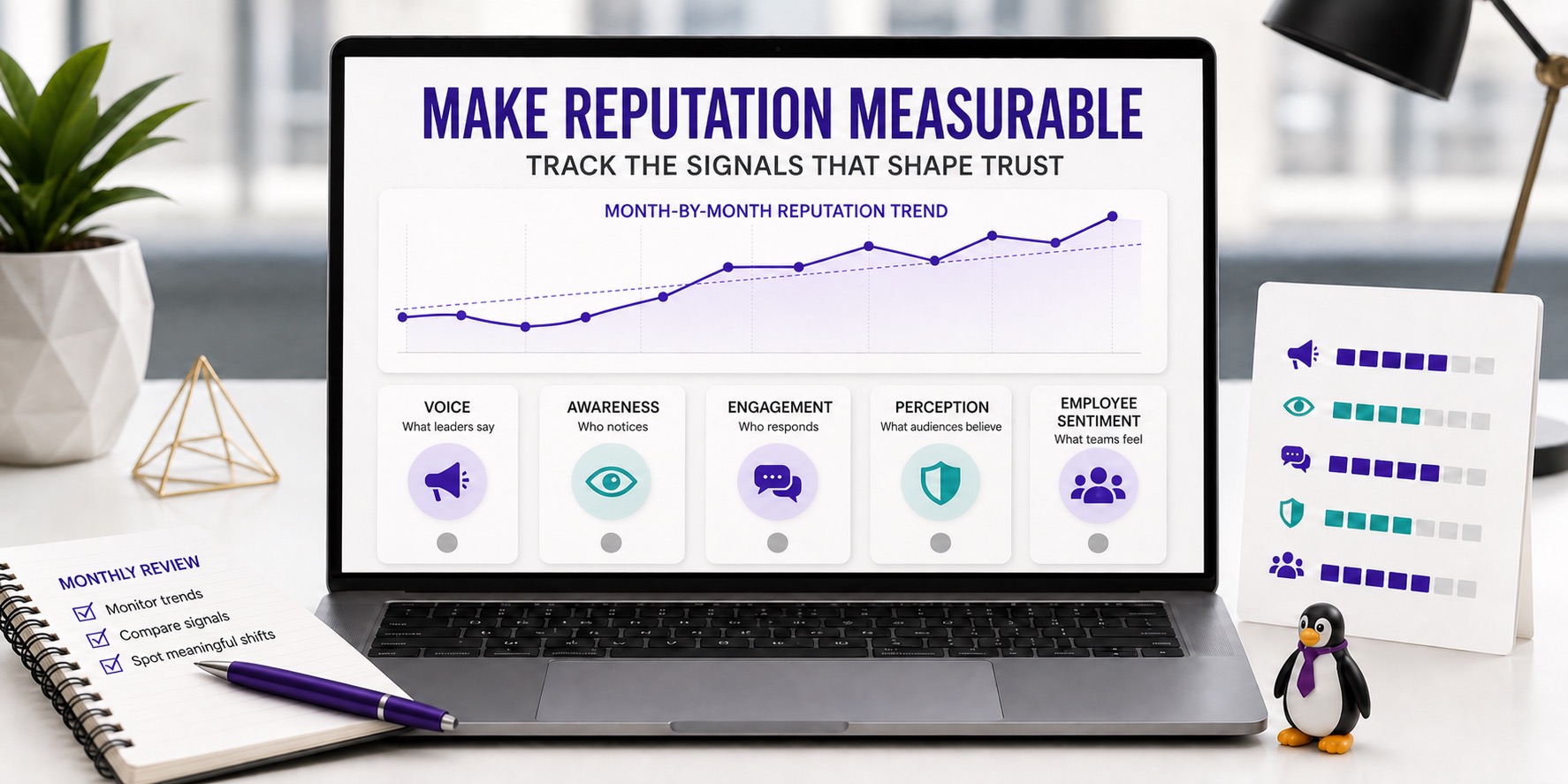
Brand reputation becomes easier to defend when CMOs track direction over time instead of reacting to isolated reviews or impressions. Taran Nandha explains how RepuTracker combines public signals into monthly trends across voice, awareness, engagement, perception, and employee sentiment, giving leaders a structured way to investigate movement, compare competitors, and connect marketing activity with reputation.
Brand conversations can become difficult when leadership wants proof but traditional brand tracking feels too expensive, slow, or limited.
Reputation offers another way into the discussion. It reflects what customers, employees, analysts, media outlets, and digital audiences signal about a company over time.
In a CMO Huddles Expert Huddle, Taran Nandha of Growth Natives demonstrated how RepuTracker brings several of those signals into a monthly, evidence-based view.
The value is not a single score. It is the ability to see direction, investigate changes, and compare those changes with business activity.
One negative review can attract executive attention. A spike in coverage can create the opposite reaction. Neither event necessarily represents the company’s broader reputation.
Monthly tracking adds context by showing whether reputation is rising, declining, or holding steady.
“We are storing data month over month so that you are able to create a trend over time and see how your brand is being built, areas where you need to work on, and how the brand is shifting over time.”
A trend does not explain causation by itself. It provides a signal worth investigating.
If employee sentiment declines after a restructuring, the team can review the underlying sources. If awareness rises after a sustained PR effort, marketing can examine whether the timing and contributing signals support a connection.
Reputation lives across many channels, which makes it difficult to understand through a single metric.
RepuTracker evaluates public signals across dimensions including:
The model also supports competitor and cohort comparisons. That context can reveal whether a change is specific to one company or connected to broader market movement.
Different sources carry different relevance. Employee review platforms may receive greater weight within employee sentiment, while media, search, review, and digital engagement signals contribute elsewhere.
A monthly change becomes useful when it leads to better questions.
Marketing leaders can examine:
This prevents one noisy data point from becoming an executive conclusion.
It also turns a reputation report into a diagnostic conversation. The score identifies where to look. The underlying evidence helps the team understand what may be happening.
Reputation measurement becomes more valuable when it is viewed beside the organization’s activity calendar.
A monthly record might include major campaigns, PR changes, analyst engagement, product announcements, customer programs, layoffs, executive changes, and other events likely to affect perception.
Over time, the combination of external signals and internal context can help marketing build a stronger narrative about what influences reputation.
The data remains directional. It is not a bank balance or a direct attribution model. Its role is to make brand movement more visible and give leadership a consistent basis for discussion.
“Our goal is to keep making it better so that we can add a lot of value and validation for all the marketers that are working hard day in and day out.”
A monthly reputation review can create a shared language across marketing, communications, customer success, HR, and leadership.
Instead of relying on a yearly study or an isolated anecdote, the organization gains a recurring view of how market perception is changing.
That cadence can support conversations about:
The objective is not to reduce brand to one number. It is to make reputation visible enough to investigate, discuss, and defend.
They can combine public signals such as visibility, engagement, perception, reviews, and employee sentiment, then track how those signals change over time.
Trends provide context and make it easier to distinguish sustained movement from a temporary spike or isolated review.
Not by itself. It provides directional evidence that can be evaluated alongside campaigns, announcements, market events, and internal data.
RepuTracker is a reputation tracking capability that combines multiple public signals into monthly trends and competitor benchmarks. It is currently available to members of the CMO Huddles Leader program.
Listen to the full conversation with Taran Nandha.
CMO Huddles helps B2B marketing leaders win by bringing together peers, fresh perspectives, and opportunities to build stronger personal brands. Want to join the huddle? Learn more about CMO Huddles and apply to join the community.