
Back to Blogs
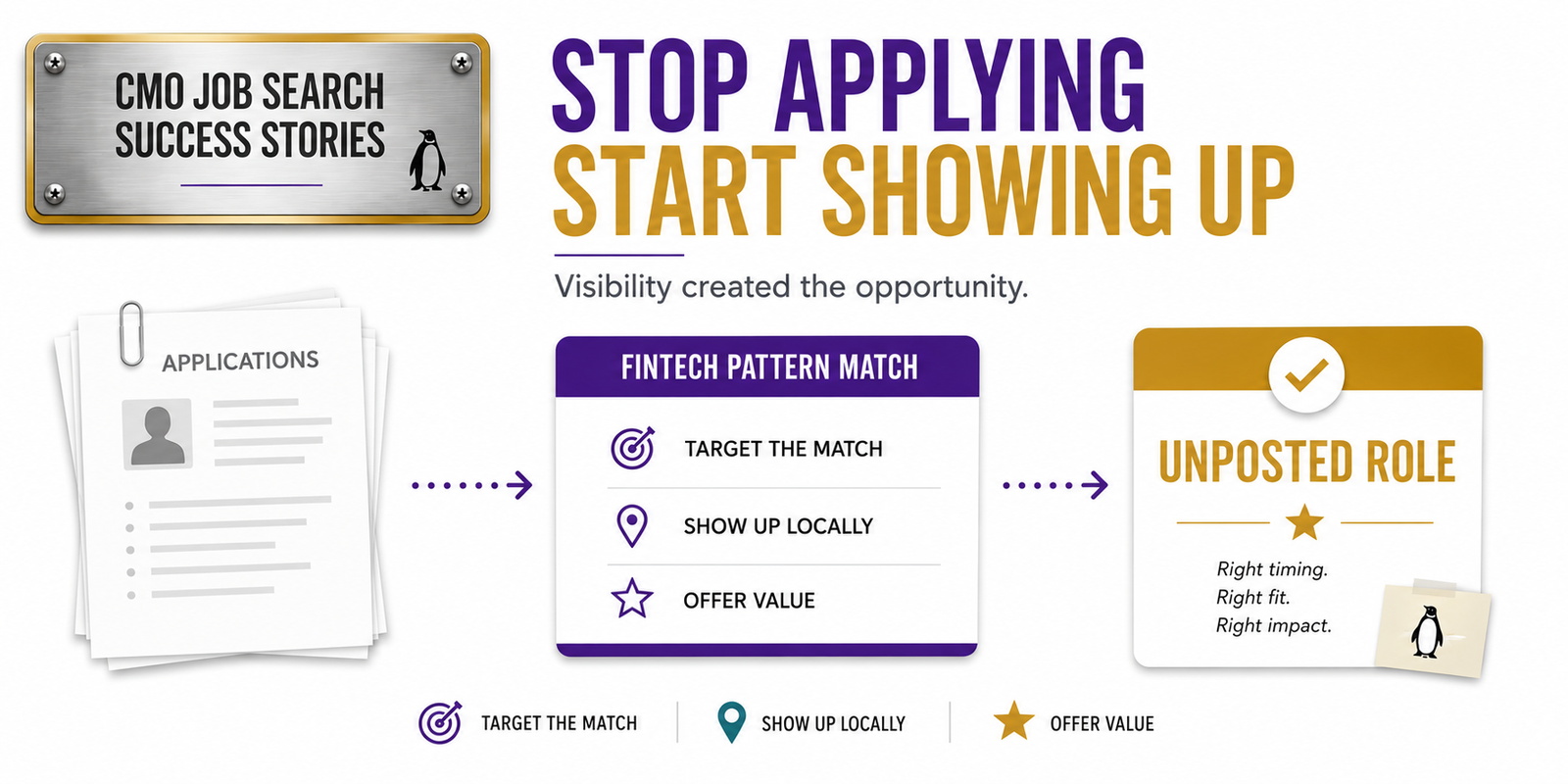
A fintech marketing leader spent seven months searching before an unposted role surfaced through a local industry network. The breakthrough came from disciplined targeting, visible participation, stronger LinkedIn positioning, and a habit of offering value. The lesson for CMO candidates is simple: Applications are a channel, but relationships and relevance create senior-level opportunities over time.
The easiest response to a slow executive search is to widen the funnel. Apply to more openings. Contact more recruiters. Spend another hour refreshing LinkedIn.
This fintech marketing leader chose focus instead.
The Huddler concentrated on direct outreach, warm relationships, and companies whose size, industry, structure, and growth stage matched previous experience. The search felt quiet for months. Then April brought four serious opportunities, all through the network.
“January, February, March were horribly dead. Then in April, everything clicked.”
The sudden change did not come from a burst of applications. It came from the relationships and visibility the Huddler had been building throughout the quiet period.
The winning role was never advertised. A Chief Human Resources Officer found the Huddler through a membership announcement from Crew, a fintech industry organization, and initiated the conversation. Roughly 20 days and eight interviews later, the company made an offer.
The job could not have been found on a job board. The Huddler had to be visible in the places where the opportunity could find them.
“Experienced marketing executive” is not useful positioning. It describes thousands of people.
The Huddler used a focused company thesis based on familiar industries, business models, growth stages, and organizational structures. Former colleagues who had moved into senior roles also helped identify environments where that experience would be understood quickly.
A useful search ICP should answer four questions:
Local fintech events in Atlanta generated visibility that external recruiters did not. The Huddler deliberately attended gatherings where leaders from target companies would be present.
"Any local event where I knew the CMO of Honeywell was coming, I needed to be there."
This was not networking for the sake of collecting contacts. It was repeated, relevant participation in a professional community. That kind of familiarity reduces perceived hiring risk. People can see how a candidate thinks, what they know, and whether they contribute before a role appears.
A personal-brand audit led the Huddler to refine their LinkedIn profile with a featured post, recognizable thought-leadership credentials, and consistent content pillars.
LinkedIn worked because it supported the positioning already being established through real relationships. It answered three questions for anyone checking the profile:
The profile became evidence, not the entire search strategy.
The Huddler regularly closed conversations by asking, “What can I do for you?”
That habit led to a fractional marketing engagement during the search. The work kept skills current, created momentum, and reduced the pressure attached to every interview.
Offering help also changes the tone of networking. The candidate is no longer asking to be rescued. They are beginning a professional exchange.
After completing a short Harvard course on agentic AI, the Huddler said, "My level of confidence talking about AI went through the roof." The confidence mattered because prospective employers were already testing whether marketing leaders understood how AI could change team design, workflows, and operating economics.
Candidates do not need to claim mastery of every platform. They should be ready to discuss practical use cases, governance, risks, and the implications for marketing work.
This search worked because the Huddler defined a tight market, became visible in the relevant community, clarified their professional positioning, kept creating value, and developed fluency in an emerging executive priority.
Applications can still play a role. They should not be mistaken for the entire strategy.
No. Applications can remain one channel, but senior candidates should not rely on them alone. Targeted relationships, recruiter connections, industry visibility, and clear positioning are more likely to uncover unposted opportunities.
A job-search ICP defines the organizations where a candidate’s experience creates the strongest match. It can include sector, size, ownership model, growth stage, go-to-market structure, and the business problem requiring new leadership.
Yes. Local and industry-specific communities create repeated exposure to decision-makers and trusted connectors. That visibility can surface roles before they reach recruiters or job boards.
Build enough practical fluency to discuss workflows, governance, team adoption, customer impact, and operating leverage. Concrete examples are more credible than broad claims about being AI-driven.
CMO Huddles has a dedicated Transition Team for experienced B2B marketing executives navigating what comes next.