
Back to Blogs
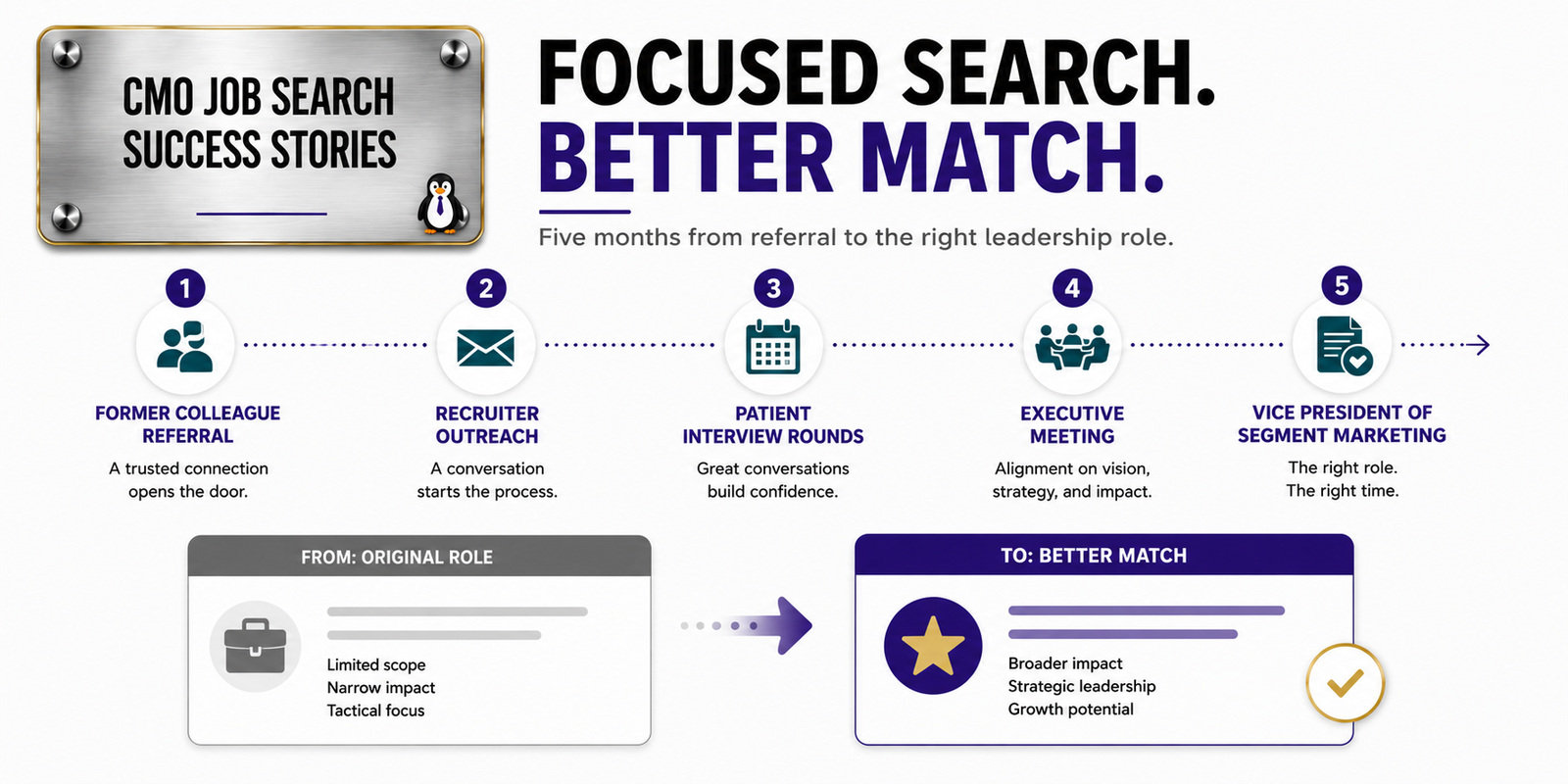
One Huddler spent eight months searching before landing a CMO role at a midsize technology company. Along the way, she declined two opportunities that did not feel right. When the right role emerged through a recruiter, the process took one month. Clear role criteria and a target-company list helped bring discipline to the search.
One Huddler spent eight months searching for the right CMO opportunity.
During that period, she received two opportunities she could have accepted. She turned down both because neither felt like the right fit.
The eventual opportunity came through TrueBridge. Once that process began, only one month passed between the first interview and the offer.
That contrast is one of the most useful parts of the story. The overall search was long, but the hiring process for the role she ultimately wanted was relatively quick.
Search Snapshot
The Huddler identified one practice that helped guide the search:
“Create a ‘must have,’ ‘nice to have,’ and ‘not important’ list of role/company attributes to help guide your search process.”
The value of the exercise was having criteria against which opportunities could be considered.
That mattered during an eight-month search in which two opportunities ultimately did not meet the Huddler's definition of the right fit.
Separating attributes into three categories also creates room for trade-offs. Some characteristics can matter without determining the final decision, while others can remain central to whether the opportunity deserves serious consideration.
The source does not identify which attributes the Huddler placed in each category. The lesson is the structure itself: define the criteria rather than waiting until an offer arrives to decide what matters.
The Huddler's second lesson focused on where to direct search activity:
“Create a target company list at the beginning of your search process and leverage all appropriate aspects of your personal and professional network to connect to those organizations.”
A target-company list gives networking a defined destination.
Instead of treating every conversation as a general request for job-search help, the candidate can identify organizations of particular interest and determine where personal or professional relationships may create a connection.
For this Huddler, role criteria helped define what the right opportunity should look like, while the target list provided a way to focus the search.
Eight months is a long time to remain in an executive search, particularly after opportunities have already appeared.
This Huddler's experience shows that receiving an offer and finding the right fit are separate milestones.
She turned down two opportunities before accepting the CMO role at the midsize technology company. Once that opportunity entered the picture, the hiring process itself took only one month.
The source does not tell us why the first two opportunities were wrong or exactly why the final one was right. What it does show is that the Huddler was willing to continue searching rather than treat any offer as the finish line.
Eight months overall. The successful opportunity took one month from first interview to offer.
Two because they did not feel like the right fit.
She recommended dividing role and company attributes into “must have,” “nice to have,” and “not important” categories.
Building a target-company list early and using personal and professional networks to connect with those organizations.
CMO Huddles has a dedicated Transition Team for experienced B2B marketing executives navigating what comes next.